Silicone Hydrogel Contact Lenses are soft lenses made from water-containing polymers combined with silicone. The silicone helps oxygen pass through the lens to the cornea, while the hydrogel supports softness and flexibility. In paraphrase, contact-lens researcher Dr. Lyndon Jones has explained their central advantage: silicone hydrogel materials can deliver more oxygen to the cornea than conventional hydrogel materials. That matters during everyday wear, when a lens rests directly on the eye for hours.
Yet material alone does not determine comfort or safety. Lens fit, surface treatment, replacement schedule, and care habits all matter. A lens can feel comfortable at first and still be unsuitable for a particular eye. The reverse can happen, too. More oxygen transmission is not a guarantee against irritation, dryness, or infection. The material is not a cure-all, and that distinction deserves attention.
This introduction sets up a closer look at how silicone hydrogel lenses work, how they compare with traditional hydrogel lenses, and what their benefits and limitations mean for wearers. An eye-care professional can help assess fit and recommend a suitable wearing schedule. Small details count: how a lens feels late in the day may differ from how it feels at breakfast. That everyday experience is useful, but it is not a substitute for an eye examination. The science is helpful; individual eyes remain individual.
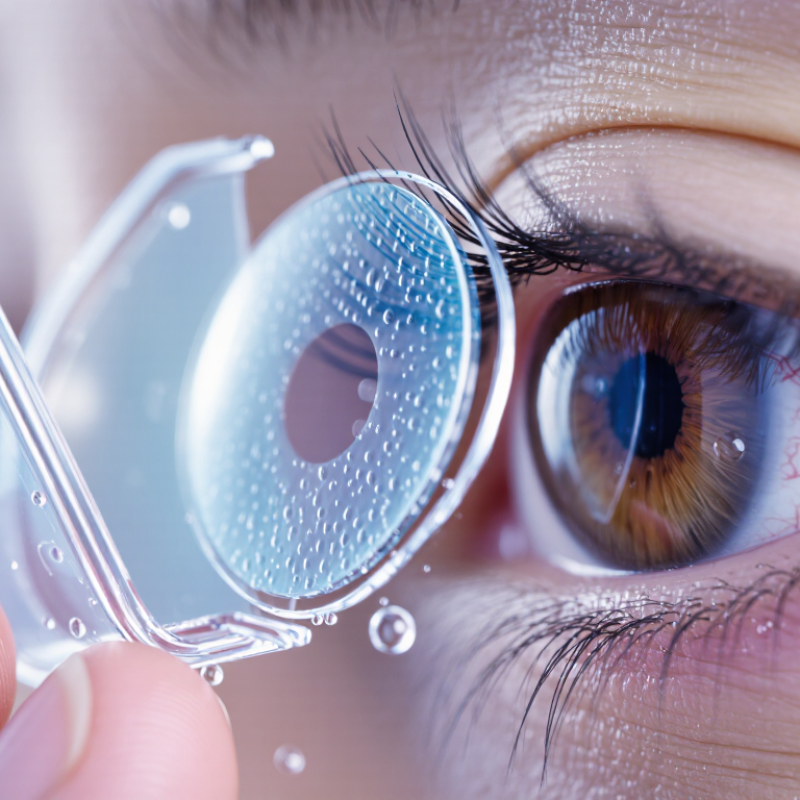
Silicone hydrogel contact lenses combine silicone-based polymers with water-attracting components called hydrogels. Silicone helps oxygen pass through the lens, while hydrophilic materials help retain water and support a comfortable fit. Formulations differ: some include surface treatments or wetting agents to reduce dryness and friction. The exact blend affects softness, water content, and how the lens behaves on the eye.
Oxygen performance is commonly expressed as Dk/t, which accounts for material permeability and lens thickness. Holden and Mertz’s clinical study, published in Investigative Ophthalmology & Visual Science in 1984, identified oxygen-transmissibility benchmarks of 24.1 for daily wear and 87 for overnight wear, in established Dk/t units. These are historical research thresholds, not personal wearing instructions. That distinction matters. A high oxygen value alone does not guarantee comfort; fit, replacement schedule, and eye health also count. Even careful explanations can make the material sound simpler than it is.
Tips: Check the lens packaging or clinician-provided specifications for material and replacement schedule. Don’t choose by water percentage alone. If your eyes feel persistently dry or irritated, stop and ask an eye-care professional for advice.
Silicone hydrogel contact lenses are soft lenses designed to let oxygen pass through to the cornea. Their silicone-containing material has high oxygen permeability, while the hydrogel component holds water and helps the lens remain soft. Think of oxygen moving through a thin, clear window. The comparison is imperfect: oxygen transmission also depends on lens thickness and fit. Clinicians use Dk/t to describe it. Dk measures a material’s oxygen permeability; t represents lens thickness. Thickness matters.
A classic clinical analysis by Holden and Mertz, published in Investigative Ophthalmology & Visual Science in 1984, estimated minimum Dk/t values of:
24.1 for daily wear
87 for overnight wear to limit corneal swelling.
These are historical reference values, not personal safety guarantees. A lens may transmit oxygen well and still feel uncomfortable or fit poorly. That distinction is easy to miss. Wear schedule, eye health, and professional fitting also affect how the cornea responds. For example, a lens that is thicker at its center may transmit oxygen differently from a thinner design made of similar material. Silicone hydrogel materials improve oxygen access, but they do not remove the need for appropriate care and clinical guidance.
Silicone hydrogel describes a lens material, not one specific shape or prescription. The material allows more oxygen to pass through than many older hydrogel materials, while design determines how the lens corrects vision. Contact Lens Spectrum’s 2023 International Contact Lens Prescribing Survey found silicone hydrogel in roughly two-thirds of reported soft-lens fits. These are prescribing patterns, not a count of all wearers, and regional practices differ.
Material alone does not guarantee comfort.
Spherical lenses commonly correct nearsightedness or farsightedness. Toric designs address astigmatism, using different optical powers across lens meridians; small rotations can blur vision.
Multifocal lenses combine powers for near and distance tasks, often for presbyopia. Some wearers use monovision, with one eye corrected mainly for distance and the other for near.
It can take practice.
A practitioner checks lens movement, fit, prescription, and vision during fitting, then may adjust the design. A lens can look ideal on paper and still feel wrong by late afternoon, especially in dry indoor air or during long screen sessions. Comfort is useful feedback, but it cannot replace a proper clinical assessment.
What Are Silicone Hydrogel Contact Lenses?
Benefits and Limitations Compared with Other Contact Lenses
Silicone hydrogel lenses combine oxygen-permeable silicone with water-containing hydrogel. Compared with many conventional hydrogel lenses, they allow more oxygen to reach the cornea. This can help reduce oxygen-related swelling during prescribed wear. Still, oxygen is only one part of the story.
Some wearers find these lenses comfortable through a long workday, while others notice dryness or a firmer feel. Fit, lens design, tear quality, and surface properties all matter. Higher oxygen transmission does not prevent infection, irritation, or problems caused by sleeping in lenses without professional approval. Nor does it guarantee better comfort for everyone. That distinction is easy to overlook. An eye-care professional can assess fit and advise whether the material suits your eyes and wearing schedule.
Tips: Wash and dry your hands before handling lenses. Follow the replacement schedule, and never top up old solution. If you notice pain, unusual redness, or blurred vision, remove the lenses and contact an eye-care professional.
A comparison of approximate oxygen permeability ranges for silicone hydrogel and conventional hydrogel lens materials.
How to read this chart: Dk measures how readily oxygen passes through a lens material; higher values mean greater oxygen permeability. Silicone hydrogel materials generally have higher Dk, while their silicone content can make some lenses stiffer. Actual performance depends on material, lens design, thickness, fit, and wear schedule. These approximate ranges are not guarantees for an individual lens.
What Are Silicone Hydrogel Contact Lenses?
Fitting, Wear, Care, and Potential Risks
A comfortable fit starts with an eye exam, not a guess at your prescription. An eye care professional checks your vision, corneal shape, and how the lens moves on your eye. Silicone hydrogel materials allow more oxygen to reach the cornea than many older soft lenses, but they do not suit everyone. Fit matters.
Follow the wear schedule given for your specific lenses. Do not sleep in them unless your clinician has explicitly approved overnight wear. Before handling lenses, wash and dry your hands; even a damp fingertip can transfer water or residue. Keep lenses away from tap water, swimming pools, and hot tubs. Use the recommended cleaning solution, and replace the case regularly. Daily disposable lenses should not be cleaned for reuse.
Dryness can still happen. A lens that feels fine in the morning may become irritating after hours in a heated room or in front of a screen. Remove lenses if you notice pain, unusual redness, light sensitivity, or blurred vision, and contact an eye care professional promptly. Do not push through discomfort. It is easy to blame the lens, though allergies or another eye problem may be involved. Regular follow-up helps catch fit or surface changes before they become harder to manage.
| Topic | Key information | Practical guidance |
|---|---|---|
| What they are | Soft contact lenses made from hydrogel materials that include silicone. Silicone allows more oxygen to pass through the lens than conventional hydrogel materials, while the hydrogel component helps retain water and maintain softness. | Oxygen transmission differs among lens designs and depends partly on lens thickness and prescription. The material alone does not determine whether a lens is suitable for a particular eye. |
| Fitting and assessment | A contact-lens fitting considers prescription, corneal shape, tear film, eye health, lens movement, and comfort. A prescription for glasses is not interchangeable with a contact-lens prescription. | Have lenses fitted and checked by an eye-care professional. Attend follow-up visits, especially when starting lenses or changing lens type, fit, or wearing schedule. |
| Lens parameters | Common parameters include power, base curve, diameter, and replacement type. Multifocal and toric designs may also be used for presbyopia and astigmatism. | Use only the lens parameters and wearing schedule prescribed for you. A lens that feels comfortable is not necessarily fitting safely. |
| Daily wear | Daily-wear lenses are worn while awake and removed before sleep unless an eye-care professional has specifically prescribed an approved extended-wear schedule. | Follow the prescribed daily wearing time. Remove lenses if your eyes become painful, unusually red, light-sensitive, or vision becomes blurry. |
| Replacement schedule | Silicone hydrogel lenses may be daily disposable or reusable on a prescribed schedule, such as every two weeks or monthly. Replacement intervals vary by product and prescription. | Discard daily disposables after one use. Replace reusable lenses on schedule even if they appear clean or comfortable; do not extend their use. |
| Cleaning and storage | Reusable lenses require the care system recommended for the lens. Multipurpose disinfecting solution and hydrogen-peroxide systems have different instructions and are not interchangeable in use. | Wash and dry hands before handling. Rub and rinse lenses if directed by the care-system instructions, store them in fresh solution, and never “top off” old solution. |
| Water and hygiene | Tap water, swimming water, and saliva are not sterile lens-care products. Water exposure can introduce microorganisms associated with serious eye infections. | Keep lenses away from water. Remove them before swimming or showering when possible; if lenses are exposed to water, follow professional advice about removing and replacing them. |
| Potential benefits | High oxygen permeability can help increase oxygen availability at the cornea compared with many conventional hydrogel lenses. Some wearers may find them comfortable, but comfort varies. | More oxygen permeability does not eliminate the risks of contact-lens wear or make sleeping in lenses automatically safe. |
| Potential risks | Possible problems include dryness, irritation, corneal scratches, inflammation, and microbial keratitis. Risk can increase with overnight wear, poor hygiene, water exposure, or wearing lenses beyond their schedule. | Do not wear lenses when your eyes are irritated or infected. Avoid sleeping in lenses unless specifically prescribed and supervised by an eye-care professional. |
| Warning signs | Eye pain, marked redness, light sensitivity, sudden blurred vision, excessive tearing, or discharge may indicate a serious problem. | Remove the lenses and seek prompt eye-care advice. Do not put them back in while symptoms persist; urgent assessment is important if symptoms are severe or worsening. |
Important: This table provides general information, not a personal fitting recommendation or medical diagnosis. Follow the instructions supplied for your prescribed lenses and care products, and consult an eye-care professional with questions or symptoms.
They are soft lenses made with silicone and water-holding hydrogel. The silicone helps oxygen pass through to the cornea. They stay soft.
Dk describes a material’s oxygen permeability, while t refers to lens thickness. A thicker center can change oxygen transmission. Thickness matters.
No. Oxygen access is only one factor. Lens fit, wear schedule, and eye health also matter, so the material alone cannot promise comfort or safety.
Only if your eye care professional has specifically approved overnight wear. Follow the schedule for your lenses. Don’t guess.
Wash and dry your hands before handling them. Keep lenses away from tap water, pools, and hot tubs. Use the recommended cleaning solution and replace the case regularly.
No. Daily disposable lenses are intended for one day of use. Cleaning them does not make them reusable.
Remove the lenses if you have pain, unusual redness, light sensitivity, or blurred vision. Contact an eye care professional promptly. Don’t push through discomfort.
A heated room or long screen session may contribute to dryness. But the lens may not be the only cause; allergies or another eye problem could be involved. It’s easy to assume.
Silicone Hydrogel Contact Lenses are soft lenses made from flexible polymers combined with silicone, a material that allows more oxygen to pass through the lens to the cornea. They are available in designs for correcting common vision needs, including nearsightedness, farsightedness, astigmatism, and age-related difficulty focusing up close. Their higher oxygen permeability may support corneal health and make them a useful option for many wearers, though comfort and suitability vary. Like other contact lenses, they may not be the best choice for everyone, and factors such as dryness, lens fit, and individual eye health should be considered.
A proper fitting by an eye-care professional helps determine the right lens design and wearing schedule. Wearers should follow instructions for insertion, removal, cleaning, storage, and replacement, and should avoid wearing lenses longer than directed. Poor hygiene, an unsuitable fit, or extended wear can contribute to irritation, dryness, or infection. Regular eye examinations and prompt attention to unusual pain, redness, or blurred vision help reduce potential risks.
