What Are the Top 10 Types of Transition Contact Lenses?

Time:2026-09-19 Author:Sienna
0%

Transition Contact Lenses are attracting attention among people who want clearer vision and more comfortable light management. These lenses may adjust their appearance or tint in response to changing light conditions. However, the term “transition” is not always used consistently. Some products describe photochromic technology, while others refer to tinted, UV-filtering, or adaptive lenses. That difference matters.

This guide examines the top 10 types of Transition Contact Lenses by technology, material, tint behavior, and intended use. Each category offers practical benefits, but none suits every wearer. A lens that feels comfortable indoors may react differently near a bright window, on a cloudy street, or inside a vehicle. Small details matter. Prescription accuracy, oxygen permeability, moisture retention, and replacement schedules can strongly affect daily comfort.

The discussion also considers safety and professional guidance. Contact lenses sit directly on the eye, so proper fitting and hygiene remain essential. An optometrist or ophthalmologist should confirm whether a design matches your prescription, eye health, and lifestyle. Some adaptive lenses may not replace sunglasses, especially during intense outdoor exposure. This is easy to overlook. It is also worth questioning marketing claims, because real-world performance can vary with temperature, lighting, and individual sensitivity. By comparing these 10 types carefully, readers can make a more informed decision instead of choosing based only on appearance or advertising.
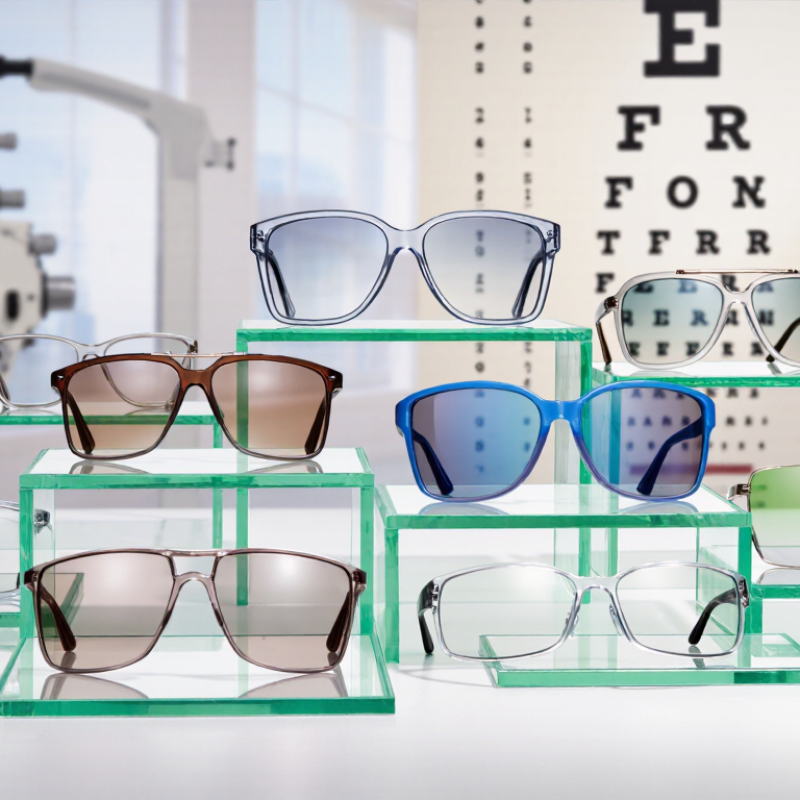
What Are the Top 10 Types of Transition Contact Lenses?

What Transition Contact Lenses Are and How They Function

Transition contact lenses are photochromic lenses designed to respond to changing light.

Special light-sensitive molecules adjust the lens tint when exposed to bright outdoor conditions. Indoors, the tint usually becomes lighter. The prescription remains stable; only the lens appearance changes.

They can help reduce glare during a sunny walk or commute. However, they are not sunglasses. They may not block all ultraviolet radiation or cover the entire eye area.

The phrase “top 10 types” often describes different lens formats rather than ten separate technologies.

Options may include daily disposable, biweekly, monthly, spherical, toric, multifocal, monovision, hydrogel, silicone hydrogel, and UV-filtering designs.

Some formats can combine with photochromic features, depending on prescription and local availability. An eye-care professional checks corneal health, tear quality, prescription needs, and wearing habits before recommending a suitable option.

Comfort matters. A lens that looks advanced may still feel dry by late afternoon.

In real use, the tint response is gradual, not instant.

A wearer entering a car may notice a faint shade for several minutes. Temperature, cloud cover, and windshield filtering can affect performance. The lenses may also appear less effective in dim winter light.

That limitation deserves honest attention. They cannot replace protective eyewear during sports, construction, or intense sunlight.

Proper cleaning, replacement schedules, and follow-up examinations remain essential, even when the lenses feel comfortable. Availability and regulatory clearance can differ between countries.

The Main Technologies Behind Light-Adaptive Contact Lenses

Light-adaptive contact lenses combine vision correction with materials that respond to changing light. Their central technology is photochromic chemistry. Special molecules darken when exposed to stronger ultraviolet or visible light, then gradually return to a clearer state indoors. The response depends on temperature, light intensity, lens design, and wearing conditions.

The ten most discussed types include daily photochromic lenses, reusable photochromic lenses, silicone hydrogel lenses, hydrogel lenses, toric designs, multifocal designs, monovision designs, tinted adaptive lenses, UV-filtering lenses, and experimental electronically controlled lenses. These categories often overlap. A daily lens may also use silicone hydrogel material and astigmatism correction. That overlap can confuse shoppers.

Material structure matters. Silicone hydrogel allows more oxygen to reach the cornea, while hydrogel lenses may feel softer for some wearers. Surface treatments can improve moisture retention and reduce deposits. Newer research explores electrochromic layers, liquid-crystal systems, and light sensors. These approaches could provide faster, more precise tint control. They remain less common in routine eye care.

In real use, adaptation is not instant. A lens may stay darker briefly after entering a room. Windshield glass can also reduce the activating light. Prescription accuracy, tear-film stability, and fit still matter more than clever technology. I have found that comfort varies widely between users. That is an important limitation. An eye-care professional should check corneal health, wearing habits, and the lens replacement schedule before fitting any adaptive design.

What Are the Top 10 Types of Transition Contact Lenses?

The Main Technologies Behind Light-Adaptive Contact Lenses

The chart compares ten optical-control approaches by the part of the electromagnetic spectrum they are commonly designed to influence. UV spans approximately 280–400 nm, visible light 400–700 nm, and near-infrared light begins above 700 nm. The ranges describe intended optical-control regions, not measured clinical performance or commercial availability.

Ten Notable Types of Transition Contact Lenses Compared

What Are the Top 10 Types of Transition Contact Lenses?

Ten Notable Types of Transition Contact Lenses Compared

Transition contact lenses usually refer to lenses that adjust their tint in changing light. The category is less tidy than marketing suggests. Ten notable types include daily disposable, monthly, spherical, toric, multifocal, monovision, silicone hydrogel, hydrogel, UV-filtering, and cosmetic photochromic lenses. Daily lenses reduce storage concerns, while monthly lenses may offer a lower routine cost. Toric designs correct astigmatism. Multifocal and monovision designs address presbyopia, but adaptation can feel uneven. Silicone hydrogel generally supports higher oxygen transmission. Hydrogel lenses may feel softer for some eyes. UV-filtering lenses add protection, but they cannot replace sunglasses.

The key comparison is not simply “light to dark.” Photochromic behavior depends on ultraviolet exposure, temperature, and lens design. Indoor changes may be subtle. A clinical fitting remains essential, especially for dry eyes or astigmatism. The U.S. Food and Drug Administration classifies contact lenses as medical devices, reinforcing the need for professional supervision. The Centers for Disease Control and Prevention reported that 99% of surveyed contact lens wearers had at least one risky hygiene habit. That figure is uncomfortable, but useful. A transition lens still needs clean hands, correct replacement, and approved care products. Some claims also sound stronger than the evidence. Independent clinical testing should matter more than darker-tint promises.

How to Choose Transition Lenses for Different Vision Needs

What Are the Top 10 Types of Transition Contact Lenses?

How to Choose Transition Lenses for Different Vision Needs

Transition contact lenses are not one universal solution. They may combine photochromic tinting with single-vision, bifocal, or multifocal prescriptions. Other useful categories include UV-filtering, blue-light-filtering, polarized, high-index, sports, dry-eye-friendly, and astigmatism-correcting designs. Each option addresses a different concern, so the best choice depends on your prescription, daily routine, and eye health.

For outdoor walking, cycling, or driving, ask whether the lenses darken effectively behind a windshield. Some photochromic materials react less inside vehicles. Polarized lenses can reduce reflected glare from wet roads, but they may not replace protective eyewear. People with astigmatism often need toric designs. Progressive users need accurate measurements and a short adjustment period. High-index materials can reduce thickness for stronger prescriptions.

Comfort matters as much as appearance. If your eyes feel gritty after several hours, a breathable material or a different wearing schedule may help. A licensed eye-care professional should check the fit, tear film, corneal health, and prescription before recommending any lens. Do not sleep or swim in lenses unless specifically approved. That detail is easy to overlook. Photochromic performance can also vary with temperature, lighting, and lens material, so real-world results may differ from expectations. A practical trial, careful follow-up, and honest feedback usually lead to a safer choice.

Safety, Wear, Care, and Limitations of Transition Contact Lenses

What Are the Top 10 Types of Transition Contact Lenses?

Transition contact lenses can be grouped by purpose and construction. Common categories include clear-to-tinted lenses, prescription lenses, plano lenses, daily disposables, reusable lenses, soft hydrogel lenses, silicone hydrogel lenses, astigmatism lenses, multifocal lenses, and cosmetic transition lenses. Each type needs professional fitting. An eye-care provider should check corneal health, tear quality, prescription accuracy, and wearing habits before recommending one. Comfort is not proof of safety.

Wear them only for the schedule provided by your eye-care professional. Never sleep, swim, shower, or use hot tubs while wearing them. Wash and dry your hands before handling the lenses. Use fresh approved solution, not tap water or saliva. Replace the storage case regularly. A lens may darken outdoors, but its response can be slower in cold weather. It may also remain relatively clear inside a vehicle because glass can reduce activating light. Transition lenses should not replace protective eyewear or reliable sunglasses.

Redness, pain, light sensitivity, blurred vision, or unusual discharge requires immediate removal and professional advice. Do not “wait and see” for several days. That habit can be risky. These lenses may also feel dry during long screen sessions, windy commutes, or low-humidity travel. Some users need lubricating drops approved for contact lenses. Results can vary between eyes, prescriptions, and lighting conditions. I once assumed darker lenses meant stronger protection; that is not always true. Read the product instructions carefully, and arrange follow-up checks when comfort or vision changes.

What Are the Top 10 Types of Transition Contact Lenses? - Safety, Wear, Care, and Limitations of Transition Contact Lenses

Type or Design Primary Use Typical Wear Pattern Safety and Care Requirements Main Limitations
1. Light-Adaptive or Photochromic Lenses Designed to change tint in response to certain light conditions and may help manage brightness outdoors. Wear only for the schedule prescribed by an eye-care professional; the tint may change gradually rather than instantly. Follow the manufacturer’s cleaning and replacement instructions. Continue using appropriate sunglasses and never use the lens as eye protection during hazardous activities. Tint response can vary with temperature, light intensity, and ultraviolet exposure. It does not necessarily provide complete UV protection, glare control, or polarized vision.
2. Daily Disposable Lenses Convenient correction for nearsightedness, farsightedness, astigmatism, or presbyopia, depending on the prescribed design. Put in a fresh pair each day and discard after removal. Wash and dry hands before handling. Do not clean, store, or reuse daily lenses unless specifically directed by a qualified professional. Usually costs more per day than reusable lenses and may be less suitable for unusual prescriptions or certain eye conditions.
3. Planned-Replacement Soft Lenses General vision correction with replacement intervals commonly ranging from about two weeks to one month, depending on the prescription and lens design. Wear during the day, remove at night, and replace on the prescribed schedule. Rub and rinse with approved contact-lens solution, use fresh solution, and clean or replace the storage case as directed. Never use tap water or saliva. Deposits and contamination can accumulate if cleaning is inadequate. Extending the replacement period increases the risk of irritation and infection.
4. Toric Lenses for Astigmatism Corrects astigmatism by using different optical powers across the lens. Usually worn during waking hours and available in daily, planned-replacement, or rigid formats. Correct orientation and stable positioning are important. Follow the prescribed wearing and replacement schedule and attend follow-up visits. The lens can rotate or move, causing fluctuating or blurred vision. Fitting may take longer than with basic spherical lenses.
5. Multifocal or Progressive-Design Lenses Provides distance, intermediate, and near vision options for many people with presbyopia. Generally worn during the day; an adaptation period is common. Use only as prescribed and report persistent headaches, eye strain, redness, or reduced vision. Maintain strict cleaning and replacement habits. Some users notice halos, glare, reduced contrast, or compromises in one viewing distance, especially in low light.
6. Monovision Lenses One eye is corrected mainly for distance and the other mainly for near vision as an option for presbyopia. Worn according to the individual prescription, commonly during waking hours. A professional fitting and trial period are important. Extra caution is needed when driving until depth perception and visual comfort are acceptable. May reduce depth perception, contrast sensitivity, or low-light visual performance. It is not comfortable or effective for everyone.
7. Rigid Gas-Permeable Lenses Provides crisp vision and can be useful for astigmatism or corneal irregularity. Typically worn during the day with a gradual adaptation period; replacement timing varies by design and condition. Clean and disinfect with products approved for rigid lenses. Avoid water exposure and keep the lens case clean and dry between uses. May feel less comfortable initially, can dislodge during impact or sports, and may cause noticeable blur if a particle becomes trapped beneath the lens.
8. Scleral Lenses Vaults the cornea and rests on the sclera; often used for irregular corneas or significant ocular-surface dryness. Usually worn during waking hours with insertion and removal routines tailored to the patient. Use sterile, preservative-free saline when filling the lens if instructed. Do not use tap water, homemade saline, or saliva. Clean and disinfect after removal. More expensive and time-consuming to fit and handle. Fogging, trapped debris, handling difficulty, or reduced oxygen transmission can occur.
9. Hybrid Lenses Combines a rigid central optic with a soft outer skirt to balance visual quality and comfort. Generally worn during the day and replaced according to the prescribed schedule. Requires cleaning products suitable for the specific lens system and careful inspection for cracks or damage before use. Handling can be more complex than with ordinary soft lenses, and the skirt or rigid center may become uncomfortable if the fit is poor.
10. Tinted, Cosmetic, or Prosthetic Lenses Changes eye appearance or helps reduce the visual impact of certain iris or pupil irregularities; some designs also include vision correction. Wear only for the approved duration and remove before sleeping unless overnight wear has been specifically prescribed. A proper eye examination and fitting are essential, including for plano lenses with no prescription. Use only approved care products. May reduce light transmission, contrast, or peripheral vision. Decorative lenses obtained without professional fitting can cause corneal injury, infection, or vision loss.
General safety note: Contact lenses should be prescribed and fitted by a qualified eye-care professional. Do not sleep, swim, shower, or use hot tubs while wearing lenses unless specifically approved for that activity and lens type. Remove lenses and seek prompt professional care for pain, marked redness, light sensitivity, discharge, or sudden blurred vision. Contact lenses do not replace protective eyewear or sunglasses.

FAQS

What are transition contact lenses?

They adjust their tint when light conditions change. Their response depends on ultraviolet exposure, temperature, and lens material.

What types are available?

Common types include daily disposable, monthly, spherical, toric, multifocal, and monovision lenses. Other options include silicone hydrogel, hydrogel, UV-filtering, and cosmetic photochromic lenses.

Which lenses suit astigmatism?

Toric lenses are designed for astigmatism. Accurate measurements remain important because small fitting errors can blur vision.

Can transition lenses help with presbyopia?

Multifocal and monovision designs may help. Adaptation can feel uneven, especially when reading small print or using stairs.

Do they darken inside a car?

Not always. Some lenses respond less behind windshields because ultraviolet exposure is reduced.

Do UV-filtering lenses replace sunglasses?

No. They may add protection, but sunglasses still help shield the eyes and surrounding skin.

Which lens material may feel more comfortable?

Silicone hydrogel usually allows more oxygen to reach the eye. Hydrogel may feel softer for some people. Comfort varies.

How should transition lenses be cared for?

Wash and dry your hands before handling them. Follow the replacement schedule and use approved care products.

Can I sleep or swim while wearing them?

Avoid both unless a qualified eye-care professional specifically approves it. Water and overnight wear can increase eye risks.

What should I do if the lenses feel gritty?

Stop and discuss the problem with an eye-care professional. A different material or wearing schedule may help. I expected comfort to be automatic. It is not.

Conclusion

Transition Contact Lenses are designed to respond to changing light conditions, helping wearers manage visual comfort as they move between indoor and outdoor environments. This article explains how these lenses work, including the light-adaptive materials and optical technologies that influence their performance. It also compares ten notable types according to factors such as activation speed, tint range, prescription support, comfort, and suitability for daily activities.

Choosing the right Transition Contact Lenses depends on individual vision needs, lifestyle, eye sensitivity, and wearing habits. The discussion highlights options for people who spend time in bright sunlight, work with digital screens, or need specialized vision correction. It also covers essential guidance on safe wear, cleaning, replacement schedules, and proper storage. Although these lenses may reduce light discomfort, they are not a complete substitute for protective eyewear in every situation, and their performance may vary depending on temperature, lighting, and personal eye conditions.

Sienna

Sienna

Sienna is a skilled marketing professional with a deep expertise in our company’s core products and services. With a passion for innovation and detail, she plays a pivotal role in crafting insightful blog posts that not only highlight the unique features of our offerings but also provide valuable......