Colored Daily Contact Lenses can change an appearance within minutes, but safe selection requires more than choosing a striking shade. Global buyers often compare color intensity, comfort, packaging, price, and delivery options. These factors matter, yet eye health must remain the deciding point.
Dr. Thomas Steinemann, an ophthalmologist and recognized contact-lens safety expert, stated, “Decorative contact lenses are medical devices, not cosmetics.” His warning is practical. Even daily lenses need proper fitting, verified manufacturing, and clear wearing instructions. A lens that feels comfortable for ten minutes may become irritating after several hours. Redness, dryness, blurred vision, or pain should never be ignored.
This guide examines five Colored Daily Contact Lenses for international buyers. It considers natural and vivid color effects, breathable materials, replacement schedules, package information, and user comfort. Country-specific rules also matter. Some markets require a prescription, while others impose different labeling or import requirements. Buyers should confirm local regulations and purchase only from reputable, authorized sellers.
A bright iris photo can mislead. Lighting changes the result. Dark eyes may soften pastel shades, while lighter eyes can show stronger contrast. Small details matter, including lens diameter and water content. The “best” option is not universal. It depends on eye sensitivity, lifestyle, and professional advice.
This comparison is useful, but it is not a substitute for an eye examination. That limitation deserves attention. Safe beauty should never be treated as an afterthought.
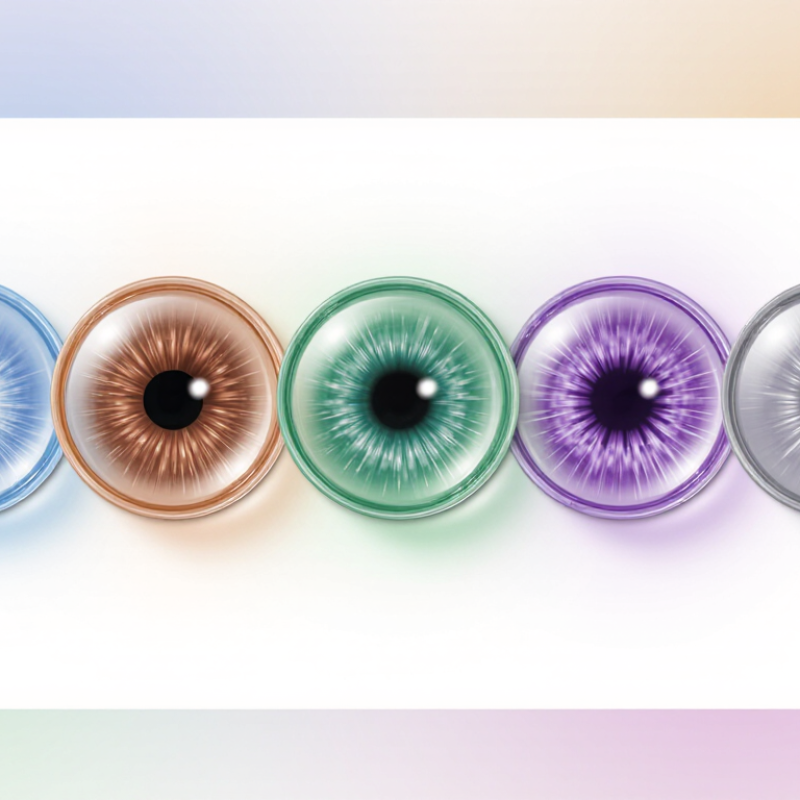
A good choice begins with medical suitability, not the shade. Daily colored contact lenses are worn once and then discarded. This can reduce cleaning mistakes and deposit buildup. Still, “daily” does not mean risk-free. A prescription and professional fitting remain essential, even for cosmetic use. An eye-care professional can check your cornea, tear film, and lens fit.
Comfort depends on more than color. The lens should allow enough oxygen to reach the eye and maintain moisture during ordinary wear. A stable fit helps prevent shifting when you blink. Look for clear material details, wearing limits, and care instructions.
Some bright patterns may reduce visual comfort, especially in dim rooms. Natural-looking color often depends on a transparent pupil area. In practice, lighting changes the result. That detail is easy to overlook.
For global buyers, traceability matters. Check the seller’s authorization, product labeling, expiry date, lot number, and local compliance information. The packaging should arrive sealed and undamaged. Read the instructions before opening the lenses.
Never rinse them with tap water. Water can introduce harmful microorganisms. Stop wearing them if you notice pain, redness, light sensitivity, or blurred vision. A lower price is not a reliable measure of value. I would also question any listing that promises perfect comfort for everyone; eyes differ, and even careful choices may need professional review.
Top Five Colored Daily Contact Lens Options for Global Buyers
Global buyers now have five practical style options. Grand View Research estimated the global contact lens market at about USD 18.4 billion in 2023. Daily disposable products remain important for convenience and hygiene. The Centers for Disease Control and Prevention reports that roughly 45 million Americans wear contact lenses. Demand is broad, but preferences vary across regions.
Subtle enhancement tints gently brighten natural irises without changing their character. Limbal-ring designs add a darker edge and create sharper definition. Opaque brown lenses offer a warm, noticeable change for dark eyes. Gray or blue lenses create cooler contrast, especially in bright outdoor settings. Toric colored dailies may suit buyers with astigmatism, although availability differs by prescription and country. Fit comes first.
Color is not the only test. FDA guidance classifies decorative lenses as medical devices requiring professional fitting and a prescription in the United States. Buyers should verify water content, oxygen permeability, base curve, diameter, replacement schedule, and local approval. Packaging should show an intact seal and clear expiry date. Never share lenses. Never sleep in daily lenses.
Industry figures can differ because reports use different market definitions. That deserves caution. A vivid color may look excellent online but appear harsh in daylight. A softer tint may feel more natural in real life. Independent fitting advice remains more reliable than influencer images or vague marketplace claims.
Top Five Colored Daily Contact Lens Options for Global Buyers
This comparison uses representative specifications commonly found in commercially available daily disposable colored lens categories. Water content is shown as a percentage, while oxygen transmissibility is measured in Dk/t. All options are designed for single-day replacement, but actual comfort, prescription availability, color selection, and wearing time vary by wearer and product specification.
5 Best Colored Daily Contact Lenses for Global Buyers
Comparing Comfort, Color Range, Materials, and Wear Time
The best colored daily lenses depend on fit, prescription, and wearing conditions. A licensed eye-care professional should confirm the base curve and diameter before purchase. Comfort starts with stable movement, not color alone. Silicone hydrogel options usually provide higher oxygen transmission for long daytime use. Hydrogel lenses may feel softer at first, especially for occasional wearers. However, comfort varies between eyes. No material wins for everyone.
A subtle limbal-ring design can enlarge the iris gently and suit office lighting. Multi-tone lenses create more depth, particularly on lighter natural eyes. Opaque pigment offers stronger coverage for darker irises, but it may look less natural in bright sunlight. Soft blended patterns often provide the most balanced appearance. The fifth choice is a moisture-focused daily lens for dry indoor environments. It can help, but dryness may still come from screens, airflow, or poor blinking.
Daily lenses should be worn only for the approved schedule, never overnight. “Daily” usually means single-use, not all-day protection. Many products are designed for several hours, while others may be suitable for longer wear under professional guidance. Stop wearing lenses if redness, pain, light sensitivity, or blurred vision develops. Color range is important, yet safe fit matters more. I would not trust a dramatic shade without transparent material and compliance information. Regional regulations also differ, so buyers should verify authorized distribution and professional fitting in their location.
| Rank & Lens Profile | Best For | Color Range | Lens Material | Water Content | Oxygen Performance | Comfort Profile | Recommended Daily Wear | Replacement Schedule | Important Buying Considerations |
|---|---|---|---|---|---|---|---|---|---|
| 1. Natural-Enhancement Daily Lens | First-time colored-lens users and everyday office wear | Soft brown Hazel Gray Green | Hydrogel, commonly based on a low-to-moderate water-content daily-disposable polymer | Approximately 40%–55% | Moderate; suitable for normal daytime wear when prescribed correctly | Very good | Up to approximately 8–10 hours, subject to eye-care professional guidance | Single use; discard after removal | Subtle limbal patterns usually provide a more natural appearance. A thin, well-centered design can reduce awareness during routine activities. |
| 2. Moisture-Focused Daily Lens | Users who experience occasional dryness in air-conditioned or heated environments | Honey Light brown Olive Blue-gray | Hydrogel with a higher-water-content formulation and a moisture-oriented surface design | Approximately 55%–58% | Moderate; higher water content does not automatically mean higher oxygen transmission | Very good initially; may vary with dryness | Approximately 6–8 hours for many users, with breaks and rewetting drops if approved | Single use; never extend to multiple days | Higher-water-content lenses may feel comfortable at first but can lose water over time. Preservative-free lubricating drops may be preferable when compatible with the lens. |
| 3. Silicone-Hydrogel Colored Daily Lens | Users who prioritize oxygen supply and longer daytime schedules | Enhancement brown Cool gray Aqua Deep green | Silicone hydrogel, often selected for higher oxygen transmission than conventional hydrogel | Approximately 38%–48% | High relative to conventional hydrogel, depending on lens thickness and design | Good to very good | Approximately 8–12 hours only if prescribed and tolerated | Single use; discard after removal | Silicone hydrogel can support corneal oxygenation, but material stiffness, surface treatment, fit, and pigment design still determine comfort. |
| 4. High-Definition Cosmetic Daily Lens | Photography, events, and buyers seeking a more noticeable iris effect | Vivid blue Emerald Silver gray Warm hazel | Hydrogel with an opaque or multi-zone printed pigment pattern | Approximately 38%–55% | Moderate to high depending on the exact polymer and lens thickness | Good when properly fitted | Approximately 4–8 hours for many wearers | Single use; do not share or reuse | Opaque pigment may reduce the perceived naturalness and can affect comfort if the printed zone is thick, decentered, or overlaps the pupil under changing light. |
| 5. Low-Contrast Blending Daily Lens | Global buyers wanting a conservative look across different skin tones and lighting conditions | Soft hazel Chestnut Smoky gray Muted green | Hydrogel or silicone hydrogel with a transparent multi-tone blending pattern | Approximately 40%–55% | Moderate to high, depending on the material and oxygen-transmission rating | Very good | Approximately 6–10 hours, based on fit, prescription, and individual tolerance | Single use; discard at the end of the day | Blended color transitions can look more natural than solid opaque designs. Confirm that the lens has an adequate clear pupil zone and stable movement on the eye. |
| Buyer guidance: These are representative performance ranges for colored daily-disposable lens designs, not guaranteed specifications for every product. Actual comfort, oxygen transmission, water content, wearing time, and color appearance vary by prescription, base curve, diameter, pigment construction, climate, and individual eye condition. Colored contact lenses should be fitted and prescribed by a qualified eye-care professional, even when no vision correction is required. Do not sleep, swim, shower, or share lenses while wearing them. | |||||||||
Colored daily contact lenses can look simple, but they remain regulated medical devices in many markets. Even non-prescription lenses may require professional fitting and local authorization. Rules differ between the United States, European Union, United Kingdom, Canada, Australia, and Asian markets. Buyers should check the relevant health authority before ordering.
A valid prescription should include power, base curve, diameter, and replacement guidance. An eye-care professional can confirm whether the lens moves safely across the cornea.
Color patterns may reduce comfort or vision, especially in dim light. Daily lenses should be worn once, then discarded.
Never sleep, swim, or shower in them. Clean hands matter.
Packaging should show the manufacturer, lot number, expiry date, material, and regulatory information required in the destination market. Import approval may also affect delivery.
Online images can misrepresent the final color. That is easy to underestimate. A safer buying process uses sealed packaging and a licensed optical seller.
Buyers should stop wearing lenses after pain, unusual redness, discharge, or blurred vision. Seek prompt professional care instead of trying another solution.
Regulatory labels can be confusing, and a familiar symbol does not always prove approval for every country. Check twice.
Choosing colored daily contact lenses starts with eye health, not the shade shown in a product image. An eye-care professional should check your prescription, corneal shape, tear film, and sensitivity. Daily lenses can feel convenient, but they still require a valid prescription and proper fitting. Rules differ across countries, so confirm local requirements before ordering from an overseas seller.
For global buyers, compare five practical qualities: fit, oxygen transmission, color realism, moisture comfort, and packaging reliability.
A good lens should stay centered when you blink and avoid a cloudy edge in your vision. Natural-looking pigments usually blend better than a solid, painted circle. If your eyes become gritty after several hours, the lens may not suit your tear balance. Do not judge comfort from one short trial. Weather, screen use, and travel can expose problems later.
Check the sealed package, expiry date, power details, and storage instructions before opening. Wash and dry your hands, use each lens once, and never sleep or swim in it. Replace it immediately if the package is damaged or the lens feels torn.
Stop wearing lenses when you notice pain, marked redness, light sensitivity, or sudden blur.
Appearance may win the first decision, while comfort determines whether the choice is sensible. That is an imperfect test. An optometrist’s advice remains more dependable than reviews, filters, or dramatic before-and-after photos.
Have an eye-care professional confirm your prescription, base curve, and diameter. Fit matters more. A lens should stay centered when you blink.
Silicone hydrogel lenses often provide higher oxygen transmission. Hydrogel lenses may feel softer initially. No material suits every eye, so comfort needs testing.
Blended, multi-tone patterns usually look softer than solid pigment. A subtle limbal ring can gently enlarge the iris. Opaque colors cover dark eyes better but may look obvious in sunlight.
Moisture-focused lenses may feel helpful around screens and air conditioning. Dryness can still come from airflow, long screen sessions, or infrequent blinking. I would not blame the lens immediately.
Follow the approved wearing schedule and professional guidance. “Daily” usually means single-use, not unlimited daytime protection. Never sleep, swim, or shower while wearing them.
Check the sealed package, expiry date, lot number, material, and prescription details. Look for destination-market regulatory information. A familiar symbol does not always prove local approval.
Remove the lens if you develop pain, strong redness, discharge, light sensitivity, or blurred vision. Do not try another pair immediately. Seek prompt professional care.
Not reliably. Lighting, camera settings, and your natural iris can change the result. A color may appear subtle indoors but brighter outside. That judgment can fail.
Colored Daily Contact Lenses can offer a convenient way to refresh your appearance while supporting a simple, single-use wearing routine. This guide explains what makes a good option, including comfortable moisture balance, reliable color coverage, breathable materials, clear vision, and a practical wear time for everyday activities. It also presents five types of colored daily lenses for global buyers, comparing natural and vivid color ranges, lens materials, edge designs, comfort, and suitability for different lifestyles.
Choosing the right lenses also requires attention to prescription needs, product labeling, local regulations, and professional fitting requirements, which may differ between markets. Buyers should confirm that the lenses are authorized for sale in their region and obtain guidance from a qualified eye-care professional, even when purchasing cosmetic lenses. By considering eye sensitivity, desired color effect, wearing frequency, prescription requirements, budget, and local safety standards, users can make a more informed and comfortable choice.
